
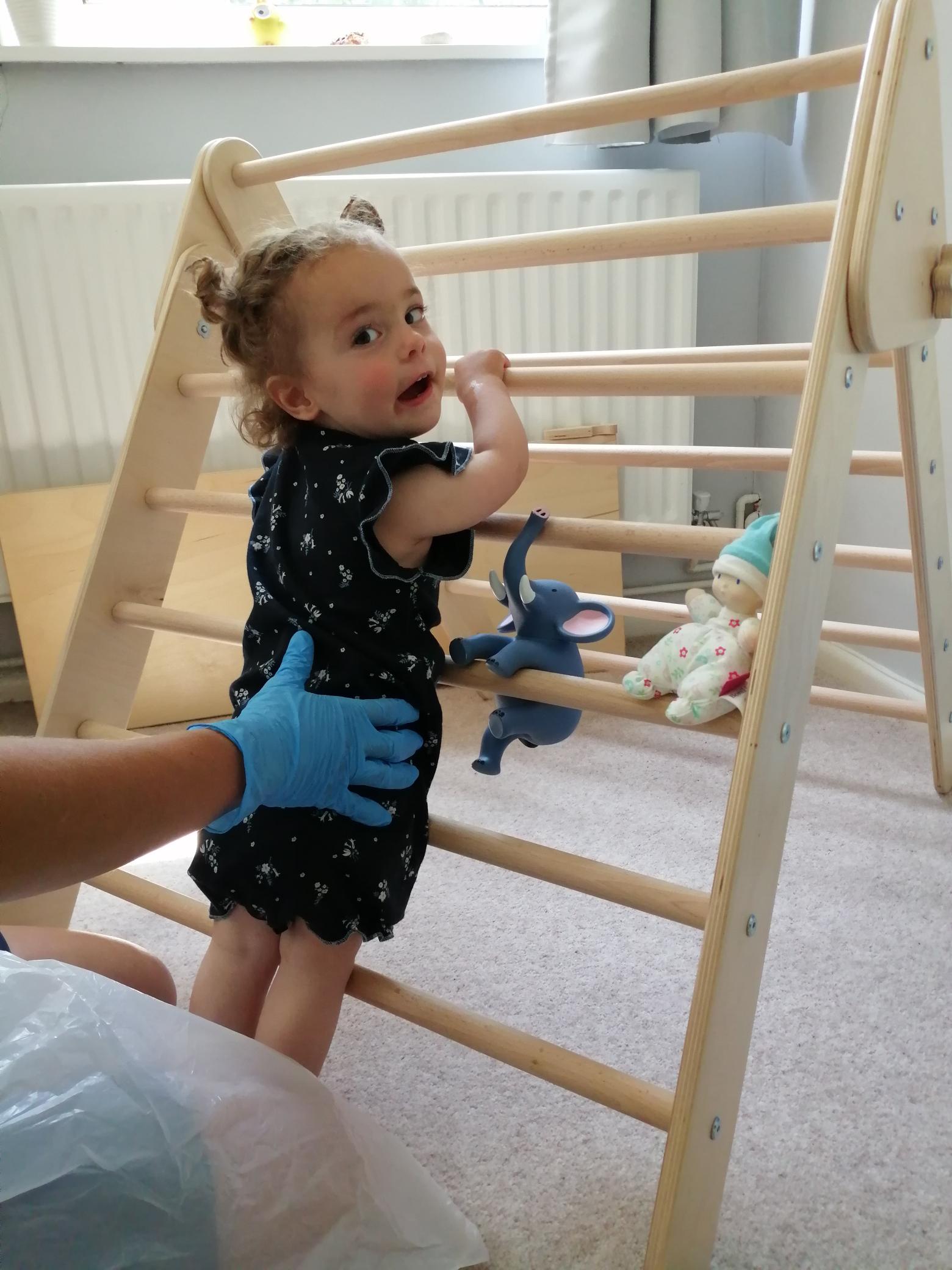
Are you worried your baby isn’t crawling yet? Maybe they’re not walking, or they prefer to bottom shuffle instead? If you’ve been wondering whether your child’s movement is on track, you’re not alone—and there’s help available.
As paediatric physiotherapists, we support children who are taking a little longer to reach their physical milestones. Here’s what to look out for and when it might be worth seeking advice.
What Are Gross Motor Skills?
Gross motor skills are the big movements children make using their arms, legs, and trunk. These skills include:
- Rolling over
- Sitting up
- Crawling or commando crawling
- Pulling to stand
- Walking, running, jumping and climbing
These skills help children explore the world, play, and build independence.
What Is a Gross Motor Delay?
Every child develops at their own pace—but if your little one is consistently behind on milestones, they may have what’s called a gross motor delay. This just means they’re taking longer to develop these large movements than expected for their age.
It doesn’t necessarily mean something is wrong—but it does mean it’s a good idea to check in with a professional.
Signs to Look Out For
You might want to speak to a paediatric physiotherapist if your child:
- Isn’t rolling by 6–7 months
- Isn’t sitting independently by 9 months
- Isn’t crawling (or commando crawling) by 10–11 months
- Isn’t walking by 18 months
- Bottom shuffles instead of crawling and struggles to pull up to stand
- Seems very floppy (low muscle tone) or very stiff (high muscle tone)
- Leans to one side, uses one hand or leg more than the other, or drags one side when crawling (asymmetry)
- Avoids tummy time or doesn’t seem to enjoy movement
Some children develop alternative ways to move, like commando crawling (dragging the body along the floor using arms), bottom shuffling, or scooting on their back. These can all be part of normal development—but if they’re the only way your child moves, or they’re struggling to progress beyond it, it might be time to check in.
What Causes Gross Motor Delay?
There are lots of reasons why a child might be late to walk, crawl or sit. Some common ones include:
- Being born prematurely
- Having low or high muscle tone
- Spending a lot of time in equipment like bouncers or car seats
- Having a mild neurological condition, like cerebral palsy or developmental coordination disorder
- Sometimes, there’s no clear cause—and that’s OK too
The good news is that most children with gross motor delays can catch up, especially with the right support.
How Can a Paediatric Physiotherapist Help?
We’re here to help your child move with confidence. A paediatric physiotherapist will:
- Assess your child’s movement, strength, and coordination
- Spot any red flags or underlying causes
- Create a fun, play-based plan to encourage progress
- Support you with tips, activities and advice you can use at home
- Monitor progress and adjust the plan as your child grows
Physio for children is gentle, playful and designed to make your child feel safe, motivated and confident.
When Should You Seek Help?
If your instincts tell you something isn’t quite right, it’s always worth checking. You can speak to your GP, health visitor, or contact a paediatric physiotherapist directly. The earlier we can support your child, the better the outcomes tend to be.
You’re Not Alone
Watching your child struggle to reach milestones can be worrying, but you’re not alone—and it’s not your fault. With the right support, most children go on to thrive and enjoy all the activities that come with growing up strong and confident.
If you’re concerned about your child’s movement or would like an assessment, we’re here to help. Get in touch today for advice, support, and friendly guidance.
Leave a Reply